Vanilla Quality & Buyer Specification Guide
What "grade", "moisture" and "vanillin content" actually mean when sourcing Tanzania vanilla, a practical specification checklist to put in an RFQ or purchase order, and what a sample inspection can and can't tell you. Grading conventions here are industry-wide, not Tanzania-specific unless stated — see our Tanzania vanilla overview for origin, production and market context.
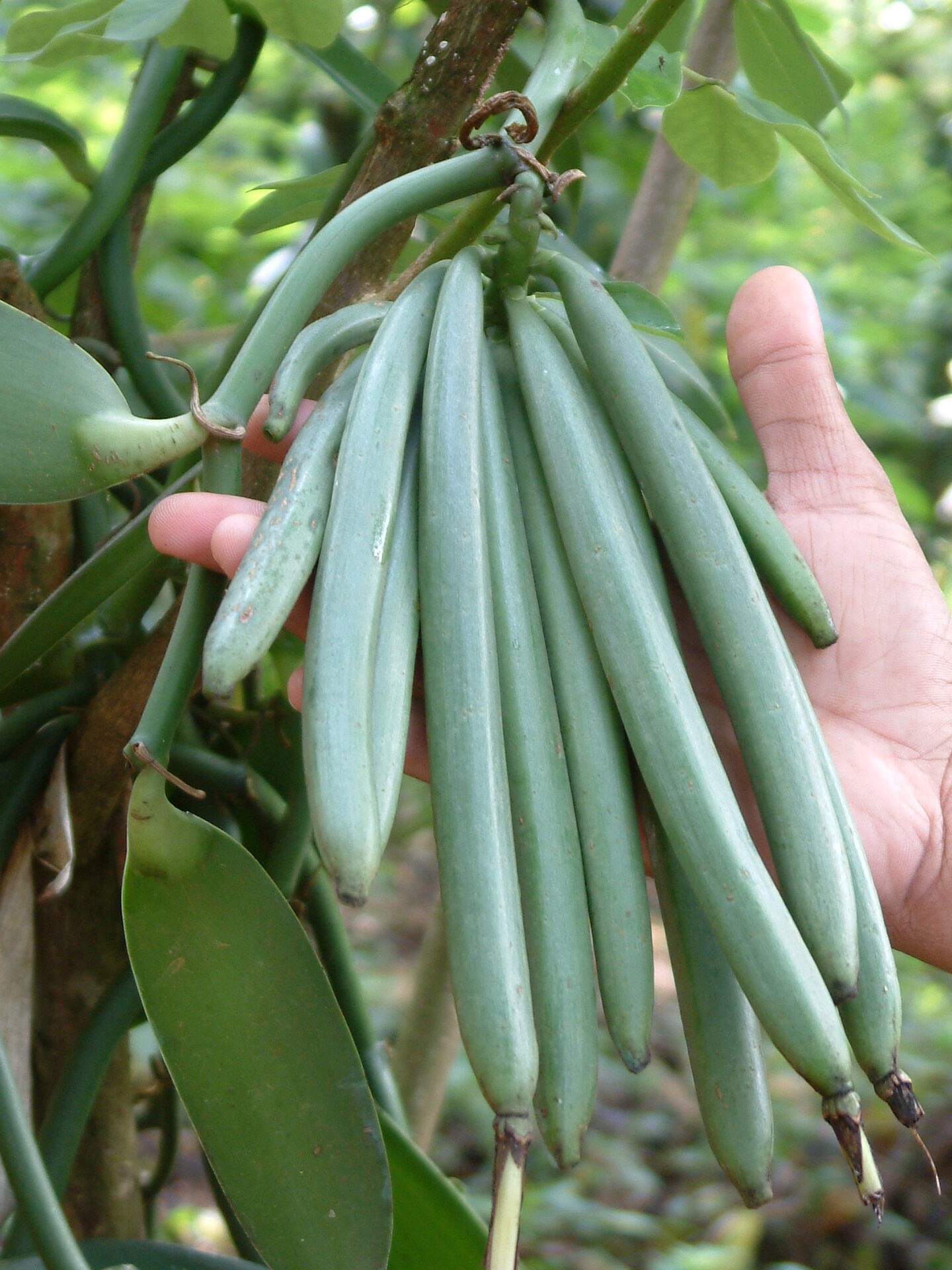

Harvest Seasonality
- Jan -- Processing season
- Feb -- Processing season
- Mar -- Outside main harvest
- Apr -- Outside main harvest
- May -- Outside main harvest
- Jun -- Outside main harvest
- Jul -- Peak harvest
- Aug -- Peak harvest
- Sep -- Peak harvest
- Oct -- Peak harvest (current month)
- Nov -- Processing season
- Dec -- Processing season
Harvest begins roughly 6-9 months after flowering and runs July-October. Tanzania vanilla is grown mainly in Kagera (northwest, near Lake Victoria), with smaller plantings in Morogoro and around Kilimanjaro -- exact timing can vary by growing area. Curing (killing, sweating, drying, conditioning) follows harvest and can extend 2-4+ months past the harvest window itself -- see our Quality & Specification Guide for the curing process.
Source: Selina Wamucii, "Tanzania Vanilla" — last verified 8 October 2026
Terminology
Suppliers, buyers and the trade press use several overlapping terms — precision here avoids costly misunderstandings in a purchase order:
- Vanilla planifolia
- The species grown in Tanzania and in the vast majority of world production (Madagascar, Uganda, Indonesia, Mexico). A Tanzania-specific molecular study (Busungu, 2009, cited in Muzanila & Assenga 2022) confirms Tanzanian vanilla is this species.
- Bourbon-type / Bourbon vanilla
- Not a botanical species — a curing-method and trade designation historically tied to Réunion, Madagascar, Comoros and neighbouring East African origins, referring to Vanilla planifolia beans cured by the traditional kill/sweat/dry/condition process described below. Tanzania vanilla is generally marketed as Bourbon-type on this basis, but "Bourbon" is not a government-certified origin mark the way, say, an appellation is.
- Vanilla beans / vanilla pods
- Used interchangeably in trade for the cured fruit of the vine. "Pod" is more common in botanical/agronomic writing, "bean" in commercial/culinary writing.
- Gourmet-grade / Grade A
- Higher-moisture, whole, unblemished beans suited to direct culinary use (whole-bean sales, scraping for seeds). See grading section below for the moisture ranges different sources cite.
- Extract-grade / Grade B
- Lower-moisture beans, often split or with minor cosmetic defects, suited to extraction rather than whole-bean sale — not lower-quality in flavour compound terms, just a different end use.
There is no single worldwide regulatory authority governing vanilla grading — grading is industry convention, not law. ISO 5565-1:1999 and ISO 5565-2:1999 provide general specification and test-method guidance (moisture, vanillin, vanillic acid, 4-hydroxybenzaldehyde and 4-hydroxybenzoic acid determination by HPLC), but actual trade grading follows the producing country's own convention or the buyer's own specification.
Grades & moisture
Grade is defined primarily by moisture content and appearance, and sources genuinely disagree on the exact cutoff — we report the ranges as given rather than pick one:
| Grade | Appearance | Moisture (COMESA) | Moisture (FAO compendium) |
|---|---|---|---|
| Gourmet / Grade A | Whole, plump, dark, flexible pods | A-1: 30–35% · A-2: 25–30% | 25–35% ("Black" / "Gourmet") |
| Extract / Grade B | Whole or split pods, lower moisture | 15–20% | 18–22% ("Brown" — most common commercial form) |
| Cuts | Damaged, very short, or heavily split pods | Discounted regardless of moisture | |
Why moisture matters: it governs pliability (higher-moisture beans can be scraped and used whole), mold risk during storage and transit, and — because vanillin is measured as a percentage of dry weight — how vanillin concentration compares between a moist gourmet bean and a drier extract bean of otherwise similar quality.
Sources: COMESA Business Council, "Product Focus: Vanilla"; FAO Post-Harvest Compendium — Vanilla (De La Cruz Medina, Rodríguez Jiménez & García). A historical academic finding reproduced in the FAO compendium (Arana, 1945) links moisture to aroma character directly: beans at 24–27% moisture were rated "sophisticated and well developed," 31–34% "just desirable," and 50–54% (under-cured) "characteristically fermented" — illustrating why moisture is treated as a quality signal, not just a shipping-weight number.
Vanillin content
Vanillin (4-hydroxy-3-methoxybenzaldehyde) is the principal, but not the only, flavour compound in cured vanilla. It is largely absent in green (unharvested) pods and develops during curing, as enzymes break down a precursor compound (glucovanillin) in the bean.
Typical ranges cited in the literature: an academic source (Cowley, 1973, cited in the FAO compendium) puts vanillin at 1.52–2.42% of bean dry weight; trade-grading figures by origin (Naturland, 2000, also cited in the FAO compendium) list Bourbon-type vanilla up to 2.9%, Indonesian up to 2.7%, Mexican up to 1.8%, and Tahitian up to 1.5%. A commonly cited importer minimum specification is 2.0% vanillin. Standard measurement is by HPLC (high-performance liquid chromatography), the method specified in ISO 5565-2:1999, with UV spectrometry as an alternative.
Vanillin % is not the whole quality story. The FAO compendium notes that around 170 volatile aroma compounds have been identified in cured vanilla (Klimes & Lamparsky, 1976) — vanillin is the dominant single compound by concentration, but the fuller aroma profile is what separates natural cured vanilla from single-compound synthetic vanillin, particularly to a trained palate. A vanillin percentage on a certificate of analysis is a useful, verifiable data point — it is not, by itself, a complete quality spec.
We have not found a credible, separately-published Tanzania-specific vanillin average. A single trade-press account (Anadolu Agency, 2021, citing a named Tanzania Agricultural Research Institute researcher) reports Kagera vanillin declining from roughly 3.3% (2010) to 2.5% (2015), linked in that account to smuggling and weaker quality control — we report this as attributed trade-press commentary, not an audited statistic, consistent with our methodology.
Water activity — an honest gap
Water activity (aw) measures how much of a food's water is actually available to support microbial growth — a more precise mold-risk indicator than raw moisture percentage in general food science. Foods in the roughly 15–40% moisture band (which covers both gourmet and extract-grade vanilla) are generally categorised as "intermediate-moisture foods," typically aw 0.6–0.85, a band where mold and yeast growth becomes possible.
We could not find a published, vanilla-specific water-activity study or an industry-recognised safe aw threshold for cured vanilla beans. Rather than invent one, we're stating the gap: buyers who need a formal aw specification should request a supplier's own test data or commission independent testing, not rely on a generic number presented as vanilla-specific. Moisture percentage (above) remains the metric the vanilla trade actually publishes and grades against.
Curing — why it's graded on the finished bean, not the harvest
Green (freshly picked) vanilla pods are essentially flavourless. Aroma, colour and the moisture/vanillin profile above all develop during curing, which the FAO compendium documents in four broad stages, with real variation in exact timing between regions and curers:
- Killing — brief hot-water immersion (roughly 63–70°C) or another method (sun-wilting, scratching) to stop the pod's vegetative processes and trigger enzymatic browning.
- Sweating — beans insulated in blankets or boxes at 45–65°C for roughly 1–3 days; they turn brown and begin developing aroma. Extending this stage too long risks rot.
- Slow drying — alternating sun and shade over several weeks, reducing moisture toward the grade-appropriate range above.
- Conditioning — bundled beans rest in closed boxes for one to several months (sources differ: some protocols specify two months minimum, others three) so aroma compounds equalise through the batch.
Our Tanzania vanilla overview has more on how this plays out in Tanzanian production specifically, including a trade-press note that inconsistent curing, drying and storage practice is a live quality-control concern for parts of the sector.
Mold, storage & packaging
Storage: the FAO Post-Harvest Compendium's guidance for sealed, bundled export beans is to hold them at roughly 10–15°C and 60–65% relative humidity; properly sealed bundles can keep up to about a year around 5°C. This is bulk/export guidance — it is a different context from advice aimed at opened, consumer-quantity beans, which several vendor sources instead recommend keeping in low ambient humidity. Don't apply consumer storage advice to a bulk shipment or vice versa.
Common defects to inspect for: visible mold (usually traceable to uneven curing, contaminated equipment or poor curing-room ventilation); splits and cracks (often associated with over-ripe harvest); insect or pest damage; and, specific to artificially fire-dried beans, anthraquinone residue from smoke exposure during drying — a defect the COMESA trade brief flags specifically as a food-safety issue distinct from mold.
Regulatory limits cited for mold/mycotoxins differ by source — we report both rather than pick one: the FAO compendium (citing Naturland, 2000) gives mould fungi max. 100,000/g, aflatoxin B1 max. 2 µg/kg, total aflatoxins max. 4 µg/kg; the COMESA brief cites aflatoxin B1 max. 5 µg/kg, total aflatoxins max. 10 µg/kg, ochratoxin max. 15 µg/kg. These likely reflect different regulatory regimes rather than a factual conflict — confirm the applicable standard for your destination market rather than assuming either figure applies by default.
Vacuum packaging: the COMESA trade brief is explicit and buyer-relevant here: vacuum-sealing vanilla that is not yet fully dried is a real quality problem — many buyers will refuse it — while vacuum-sealing already sufficiently dried beans is less of an issue, though still not universally accepted by all buyers. Traditional bulk export packaging is not vacuum-sealed at all: graded beans are bundled (roughly 70–130 pods per bundle, 150–500g), wrapped in wax paper, and packed into wax-paper-lined metal tins. If a supplier offers vacuum-sealed product, ask when in the curing timeline it was sealed.
Sources: FAO Post-Harvest Compendium — Vanilla; COMESA Business Council, "Product Focus: Vanilla".
Product forms & "vanilla powder"
Beyond whole cured beans (the dominant Tanzania export form) and extract-grade beans sold for processing, buyers will encounter "vanilla powder" — a term that covers two genuinely different products:
- True vanilla bean powder — the whole cured bean, ground fine, nothing added. Dark brown, doesn't dissolve in liquid (needs blooming/steeping like the whole bean would), and priced closer to whole beans by weight.
- Vanilla-flavoured sugar sold as "vanilla powder" — maltodextrin, dextrose or finely ground sugar infused or coated with vanilla flavouring. Much cheaper, functions as a flavoured sweetener rather than a spice.
We did not find a codified regulatory or Codex Alimentarius line separating these two under the same commercial name — the distinction is real in the trade but not label-enforced the way, say, "extra virgin" is for olive oil. When sourcing "vanilla powder," specify explicitly: 100% ground whole bean, or a defined vanilla-to-carrier ratio — don't rely on the product name alone.
Buyer specification checklist
A specification worth putting in an RFQ or purchase order, whether or not every field applies to your order:
- Species / origin — Vanilla planifolia, Tanzania (and region if it matters to you — see our origins overview).
- Grade / intended use — gourmet/whole-bean, or extract-grade for processing.
- Bean length — commonly specified in cm bands (e.g. 14–16cm, 16–18cm+).
- Moisture — a target range or minimum, per the grade ranges above.
- Whole or split — and, if split is acceptable, what proportion.
- Vanillin content — if you need a number, request the supplier's HPLC test basis, not just a percentage on an invoice.
- Appearance / defect tolerance — mold-free, acceptable minor blemish level.
- Quantity & packaging — bundle/tin/vacuum, and for vacuum-sealed product, ask when in curing it was sealed (see above).
- Certification requirements — organic, fair-trade or other, if applicable, and who issued it.
- Testing requirements — certificate of analysis, third-party lab, or buyer's own incoming inspection.
- Destination & Incoterm — see our Incoterms for Commodity Buyers guide.
Sample & inspection guidance
Before committing to a full order, a physical sample is worth evaluating for:
- Appearance — colour consistency, plumpness, visible splits.
- Aroma — should be identifiably vanilla, not sour, fermented, or musty (a musty smell can indicate mold or poor curing).
- Pliability — a gourmet-grade bean should bend without snapping; a bean that snaps cleanly is drier than gourmet range, which isn't necessarily a defect if you ordered extract-grade.
- Visible mold — reject on sight; don't attempt to salvage or partially trim visibly moldy beans for food use.
- Packaging condition — intact wrapping, no signs of moisture ingress or pest activity.
A visual/aroma sample check is a screening step, not a substitute for laboratory testing — moisture percentage, vanillin content and mycotoxin limits all require lab equipment to confirm, not inspection by eye. Our general Quality Inspection & Pre-Shipment Verification guide covers the wider pre-shipment inspection process (SGS/third-party inspection, timing, documentation) that applies across commodities, including vanilla.
Full Tanzania vanilla profile
Origins, production regions, curing in practice, and market/trade data with sources.
Read the full profile →Suppliers

Island Treasures Ltd
Zanzibar-based parent company that produces, brands and supplies premium Tanzanian food products across three brands: Simba…
Simba Vanilla
Zanzibar-based vanilla brand of Island Treasures Ltd (see the separate Island Treasures Ltd supplier profile for…

Ubora Landmark Limited
Organic black pepper exporter and bulk spice supplier sourcing from Tanga and Morogoro regions; also handles…

Viridium Tanzania Limited
Producer/exporter of gourmet and extract-grade vanilla beans, powder and cuts, plus cardamom, clove, chili and cinnamon,…

Zanj Spice Limited (1001 Organic)
Zanzibar spice production and trading company (established 2012) supervising the full chain from partner farms to…

Kashasha Mountain Development (KMD) Vanilla
Vanilla grower founded 2021 by 5 local owners, cultivating vanilla with local farmers near Kashasha (Kitobo),…
Last reviewed 25 September 2026. Sources cited inline above; see also Data Sources and Methodology for how we handle disagreeing figures and unverifiable claims.